
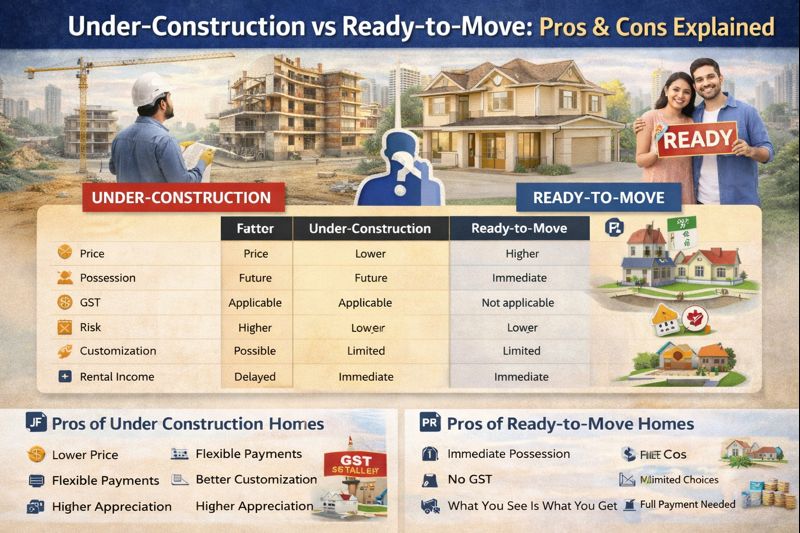
🏗️ Under-Construction vs Ready-to-Move Homes: Pros & Cons Explained
Buying a home is one of the most important financial decisions in life. One of the first questions buyers face is whether to choose an under-construction property or a ready-to-move home. Both options have their own advantages and disadvantages, and the right choice depends on your budget, timeline, and long-term goals.
In this blog, we clearly explain the pros and cons of under-construction vs ready-to-move homes, so you can make an informed and confident decision.
🏗️ What Is an Under-Construction Property?
An under-construction property is a home that is still being built and will be handed over at a future date. Buyers usually book these homes during the early or mid stages of construction.
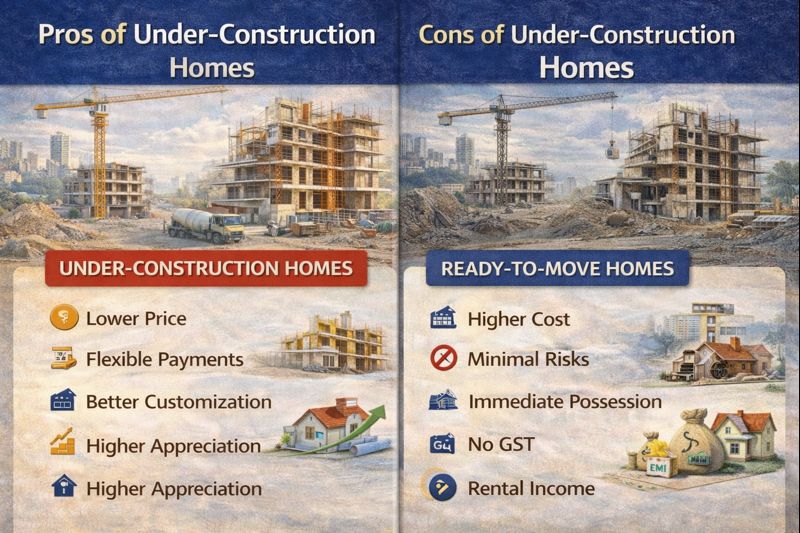
✅ Pros of Under-Construction Homes
1. Lower Purchase Price
Under-construction homes are generally cheaper than ready-to-move properties in the same location. Builders often offer attractive pre-launch prices and flexible payment plans.
2. Flexible Payment Options
Most builders offer construction-linked payment plans, allowing buyers to pay in stages instead of paying the full amount upfront.
3. Better Customization Options
When you buy early, you may be able to choose layouts, floor preferences, fittings, or interior upgrades.
4. Higher Appreciation Potential
If the project is in a developing area, the property value may increase significantly by the time construction is completed.
❌ Cons of Under-Construction Homes
1. Possession Delays
Construction delays are common due to approvals, labor shortages, or financial issues. This can disrupt your financial planning.
2. Risk of Project Stalling
If the builder faces legal or financial trouble, the project may be delayed or stopped entirely.
3. GST Applicability
Under-construction properties attract GST, increasing the overall cost.
4. Rental + EMI Burden
If you are currently renting, delays may force you to pay both rent and home loan EMI at the same time.
🏠 What Is a Ready-to-Move Home?
A ready-to-move home is a property that is fully constructed and available for immediate possession.
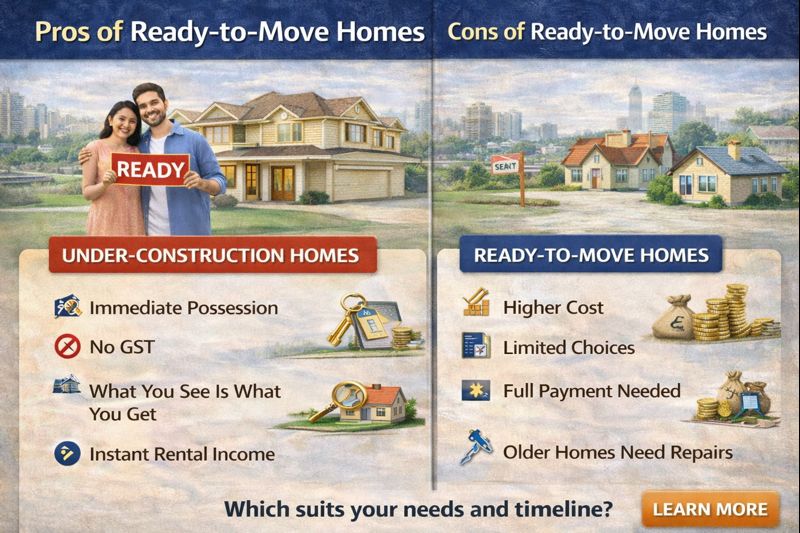
✅ Pros of Ready-to-Move Homes
1. Immediate Possession
You can move in immediately after completing the purchase—ideal for buyers who need a home urgently.
2. No GST
Ready-to-move properties are not subject to GST, which can result in significant savings.
3. What You See Is What You Get
You can physically inspect the property, check construction quality, ventilation, neighborhood, and amenities before buying.
4. Instant Rental Income
If purchased as an investment, ready homes can generate rental income immediately.
❌ Cons of Ready-to-Move Homes
1. Higher Purchase Cost
Ready-to-move homes usually cost more than under-construction properties in the same area.
2. Limited Choices
Options for preferred floor, layout, or view may be limited, especially in popular projects.
3. Full Payment Required
Unlike under-construction homes, buyers usually need to pay a large portion upfront or complete the payment quickly.
4. Older Properties May Need Repairs
Resale ready-to-move homes may require maintenance, renovation, or upgrades.
🔍 Comparison: Under-Construction vs Ready-to-Move Homes
| Factor | Under-Construction | Ready-to-Move |
|---|---|---|
| Price | Lower | Higher |
| Possession | Future | Immediate |
| GST | Applicable | Not applicable |
| Risk | Higher | Lower |
| Customization | Possible | Limited |
| Rental Income | Delayed | Immediate |
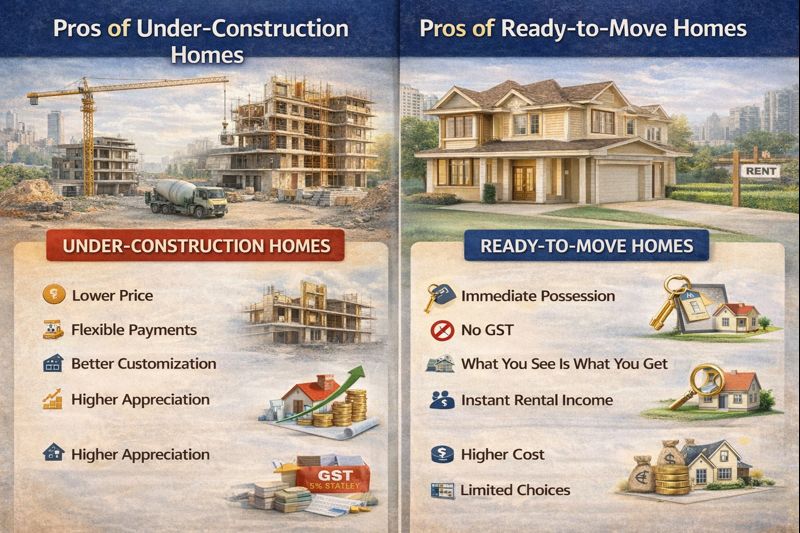
🤔 Which Option Is Right for You?
Choose under-construction if:
- You have time and are not in a hurry to move in
- You want a lower entry price
- You are buying for long-term investment
- You trust the builder and project is RERA-registered
Choose ready-to-move if:
- You need immediate possession
- You want minimal risk
- You plan to earn rental income quickly
- You prefer seeing the actual property before buying
✅ Final Thoughts
There is no one-size-fits-all answer when choosing between under-construction and ready-to-move homes. Both options can be excellent investments if selected carefully. The key is to assess your budget, timeline, risk tolerance, and future plans.
Always verify legal documents, check RERA registration, and consult experts before making your final decision. A well-informed choice today will ensure peace of mind and financial stability in the future.